
NCTC Coordinator Seeks Holistic Approach to Curb Insurgency
By Lengnan Tobias
The National Coordinator of the National Counter Terrorism Centre (NCTC), Maj.-Gen. Adamu Laka, has called for a comprehensive approach to tackle insurgency and armed violence in the North-West and North-Central.
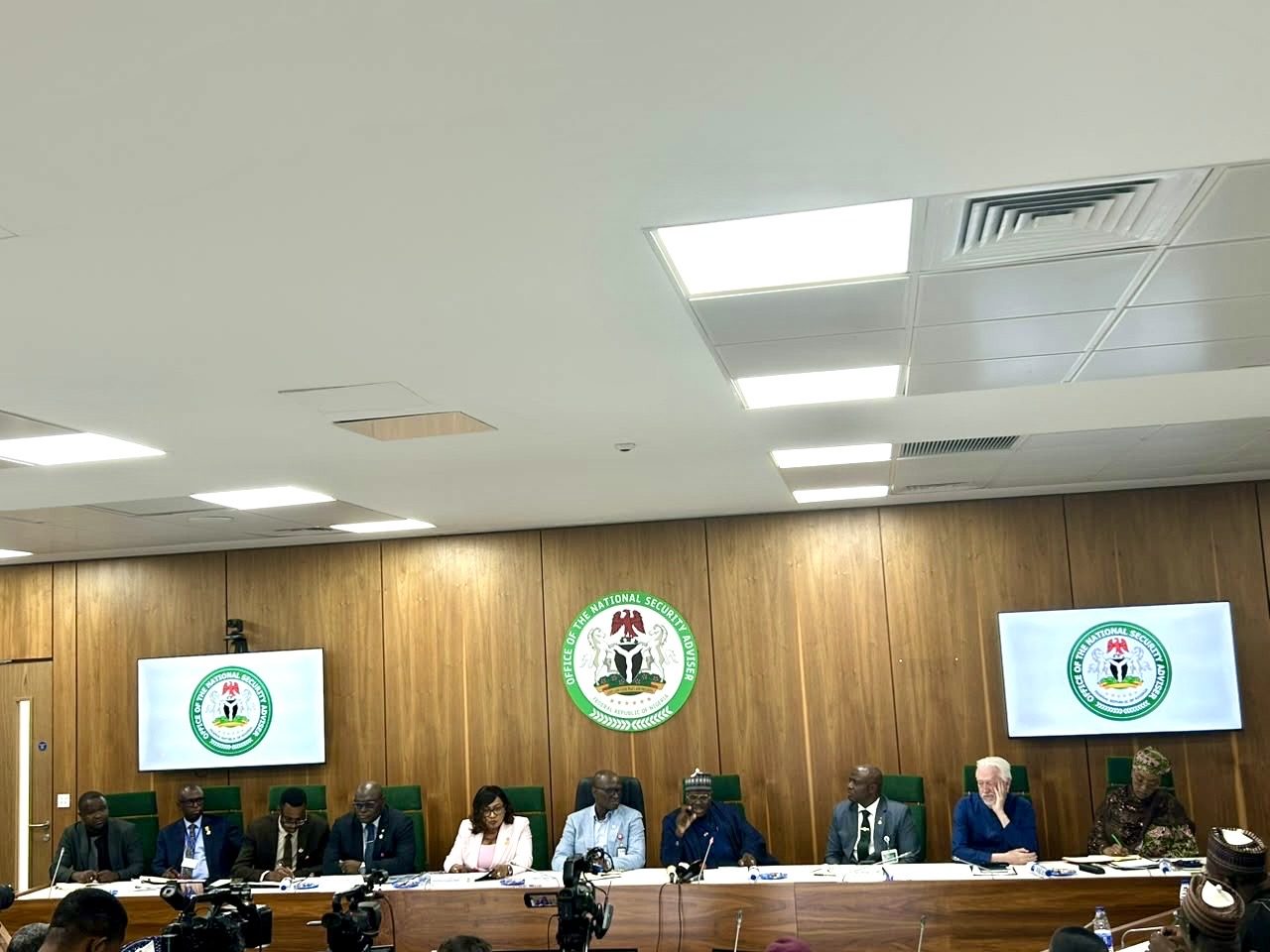
Laka made the call on Wednesday in Abuja at a policy roundtable on preventing the expansion of insurgency in the two regions.
The roundtable was organised by the NCTC in collaboration with the Bonn International Centre for Conflict Studies (BICC), with support from the German Federal Foreign Office.
The News Agency of Nigeria (NAN) reports that the event was themed “Breaking Patterns of Armed Violence: Preventing Recruitment and Supporting Exit of Armed Groups in Africa”.
Laka said armed groups, bandit networks and other violent non-state actors continued to cause deaths, displacement and loss of livelihoods, while disrupting governance, education, agriculture and social cohesion.
He warned that the growing links between criminal violence, insurgency and violent extremist networks could deepen recruitment by exploiting poverty, unemployment, community grievances and governance gaps.
“These realities require comprehensive, context-specific responses.
“Necessary military and law enforcement measures must be complemented by effective governance, community engagement, strategic communication, preventive action and credible rehabilitation and reintegration programmes,” he said.
The NCTC coordinator appreciated the German government, African Union (AU), United Nations, Usmanu Danfodiyo University, Sokoto, and other partners for supporting the initiative.
He said the roundtable was expected to improve understanding of the local factors driving the expansion of armed groups, including grievances, competition over land and resources, economic vulnerabilities, coercion, revenge, illicit financing and weak governance.
Laka urged participants to develop practical recommendations with clearly identified responsible institutions and realistic implementation plans.
He stressed that preventing and countering terrorism and violent extremism required coordinated action by government institutions and society.
Also speaking, the Deputy Ambassador of Germany to Nigeria, Johannes Lehne, said ransom payments and proceeds from banditry were often spent in cities rather than in forest hideouts.
Lehne said ransom collection involved intermediaries operating across different segments of society, adding that efforts to tackle insurgency must extend beyond rural communities.
He identified social media activities, misinformation, disinformation and the evolving relationship between banditry and jihadist insurgency as challenges to counter-terrorism efforts.
He called for a holistic approach that would support borderland communities, particularly those lacking internet connectivity and adequate road networks.
Similarly, the representative of the AU, Jocelyn Nahimana, commended Nigeria for hosting the roundtable and collaborating with the commission.
Nahimana said the activities of insurgent groups and other non-state armed actors remained a major concern for Nigeria, West Africa and the African continent.
She said sustainable solutions required stronger civilian protection, improved trust between communities and security agencies, action against recruitment drivers and credible pathways for disengagement and reintegration.
Nahimana said the AU was advancing a Continental Strategic Plan of Action on Countering Terrorism in Africa for 2026 to 2030.
She explained that the plan would provide a common framework for member states, with priorities including intelligence sharing and the disruption of terrorist financing.
She added that the commission was developing a continental framework on non-state armed groups to promote a shared understanding of their operations and dynamics.
“The AU will hold consultation for West Africa in November,” she said.
Earlier, the Deputy Governor of Sokoto State, Alhaji Idris Gobir, said the state government had spent billions of naira on security infrastructure between January and August 2026.
Gobir said the expenditure covered the provision of vehicles and military hardware, adding that the state participated in the roundtable to explore ideas that could promote peace and security in Nigeria.
Stay connected to Nigeria's global story
Related Articles



Most Read on Naija Across Borders

Tinubu Seeks Senate Approval for $20.52bn, €1.05bn Loans
2 min read

FG plans law to protect Tinubu’s economic reforms from reversal
1 min read

Tinubu Departs Abuja for Makkah to Pray for Nigeria
1 min read
Army Inaugurates 200 Projects to Boost Personnel Welfare
3 min read